

In honour of our 77th Republic Day, I’m beginning a weekly series of short essays about what ails India’s economy, institutions, and society, and how we might begin to reclaim the lofty ideals and realize the unfulfilled promises of our beloved republic to lift our country and countrymen out of benighted poverty and into bounteous plenty.
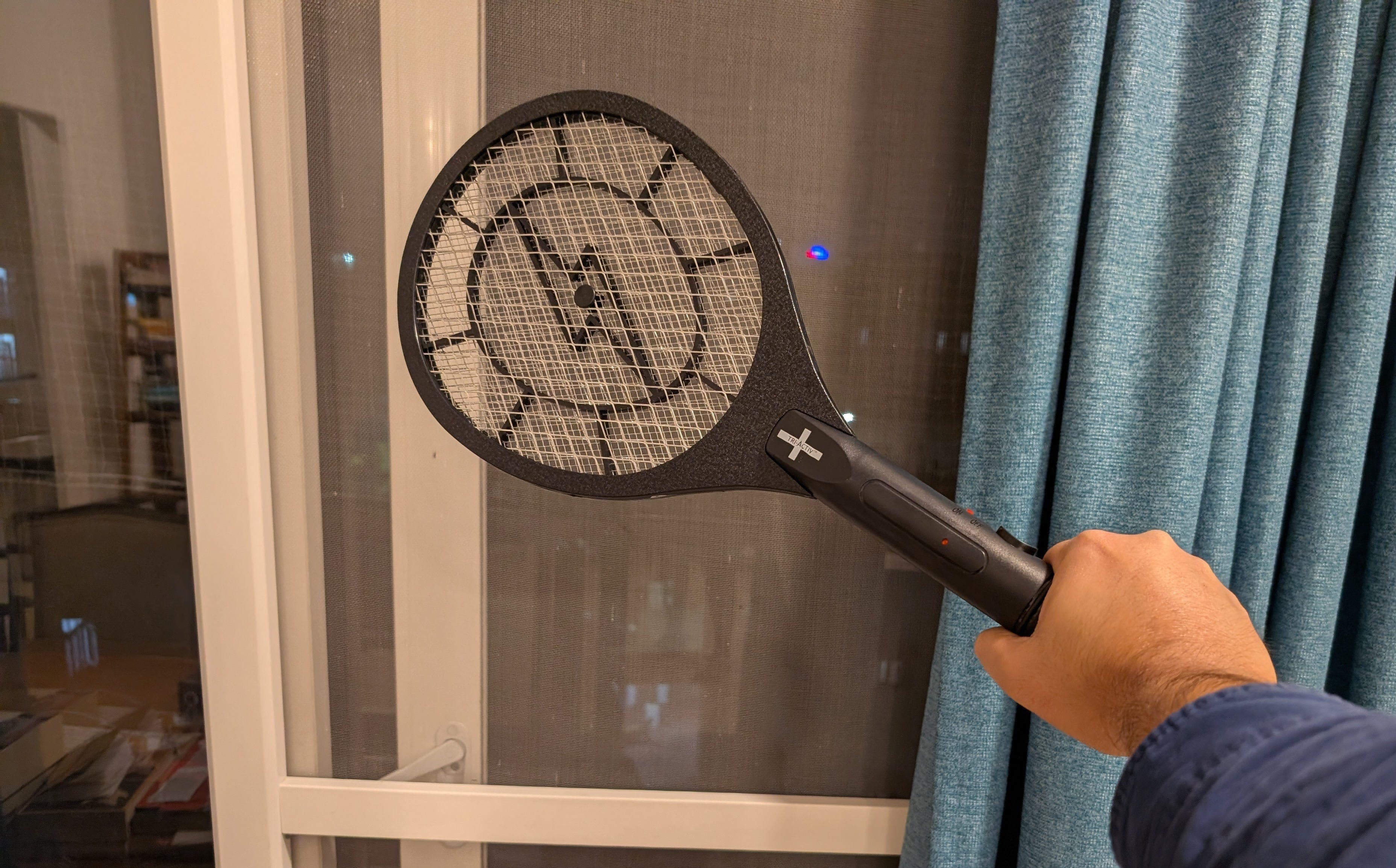
Every night before bed at my home in Hyderabad, I plug my phone in to charge, lest I have to face this cruel world defenceless in the morning, and then I pick up my weapon to do battle – my trusty mosquito bat, a hefty plastic badminton paddle electrified into an insect-killing machine. Mosquitoes spark and sizzle on the surface in a scintillating symphony I weave as I gracefully whirl and twirl my instrument. Minutes pass, 15, 20, sometimes even an hour, as I descend into a murderous reverie, and a gruesome graveyard forms at my feet.
Buzz, crackle, buzz, spark, as the air fills with the subtle scent of smoke – until, at last, they buzz no more.
And still I wake up with bumps lining my flesh, with the telltale red streaks on my sheets testifying that the parasites have extracted their microlitre of blood once more.
This is what it feels like to run a company in India – I live this physical reality every night, only to relive it in metaphor during the day. To operate a business, or frankly to do anything substantive, in our great nation is to be besieged by a constant stream of these parasites – the planning official and his handpicked ‘consultant’, the tax officer and his ‘assistant’ who calls out of the blue from an unknown number asking if I’m willing to ‘cooperate’, the inspector who’s annoyed that we haven’t come by for darshan since he came to town – each of whose main occupation seems to be harassment of the honest entrepreneur and ordinary citizen.
Even in the absence of overt corruption, the process is the punishment. Sales tax compliance alone in the GST era requires a full-time staff generating E-WayBills every day and making full filings every couple of weeks, and substantial requests for owed refunds inevitably result in hurry-up-and-wait audits that go from months of inactivity to notices demanding thousands of pages of documentation in mere days or even hours. Importing even basic lab reagents can morph into a kafkaesque nightmare, with kilograms of dry ice evaporating into the air around a tiny vial as customs officials bicker about the nuances of overlapping HSN codes and demand bespoke bonds certifying the specifics of end usage.
It’s not just the government. Behold landlords acting as though written contracts have no legal force if they see you having more success than they expected, suppliers delaying critical items by months to save a few thousand rupees on shipment costs, and middlemen adding 500% markup onto the global prices of essential raw materials.
Any single one of these parasites could be written off as a mere annoyance to be swatted away, but when they all attack at once, one spends all one’s time just trying to avoid being eaten alive. The main goal one is trying to accomplish, the raison d’être of whatever one is doing, falls by the wayside in this fight for survival against the relentless onslaught of bloodsuckers.
If I spend all my time killing bugs, when am I actually going to do the work – in my case, literally trying to end TB and cure cancer? This level of cognitive overhead for mere existence may be survivable if all you’re doing is import-export or some kind of government-sanctioned quasi-monopoly where compliance of one kind or another is most of the job anyway, but if you’re actually building something from scratch, or worse, doing something technically or creatively novel – good fucking luck.
And every time you get bitten, you run the risk of contracting something more serious – operational dengue or malaria, so to speak – that can put your business or other best-laid plans out of commission for a long while, perhaps even kill them off entirely. Despite their size, mosquitoes are the world’s deadliest animal, killing 600,000 people annually – something as innocuous as a single bite can quickly escalate into a very dangerous situation indeed, both physically and metaphorically.
In areas that are permissionless by default, such as IT and services outsourcing, where planning approvals and supply chains matter little, India is globally competitive – but as soon as you try to do something in the physical world, as soon as you touch tangible matter, whether you’re building a factory, starting a lab, or even just flying a drone, the parasite swarm buzzes in and the bleeding starts. Little wonder that so much of our nation’s growth has come from services – they might as well emanate from sealed capsules wired straight to their foreign customers, sanctums the mosquitoes can’t breach.
In places like the US and China, the government and private sector both actively grease the skids for important scientific, technological, and entrepreneurial work. Here in India, lots of people talk a big game about ‘streamlining’ processes and catalyzing innovation, but in reality – buzz, buzz, buzz. Sparks fly in this mosquito economy, but the animal spirits of long-term scientific and technological growth remain bottled up.
The mosquito bat is a half-measure that is doomed to fail, as is any attempt to combat the problem piecemeal. Mosquitoes, along with their metaphorical counterparts, are pure parasites, and they must be driven to complete extinction.
In the physical world, we need to implement a sterilizing gene drive to cause a catastrophic collapse in the fertility of female mosquitoes from species that bite humans, with the goal of totally eliminating human-biting mosquitoes before 2050.
In the world of Indian policy, we need radical reform and, indeed, the elimination of most of our bureaucracy – every chokepoint in the system is a stagnant pool of water in which these bloodsuckers breed, and only if we get the water moving by destroying these chokepoints altogether can we truly be rid of the deadly bugs birthed in them. In Indian commerce, we need a massive cultural shift towards professionalism and speed, such that precious bandwidth is not wasted on constantly negotiating and enforcing common-sense terms and expectations – the parasitic middlemen of yore must either adapt to this new world order or die trying in the face of competent competition.
And in this new India, blissfully free of buzzing, I hope we can finally get to work on building the future, not just for us at home, but for the benefit of the whole world, as befits our beloved republic, the most populous country on the planet, and the largest democracy in the history of humanity.
I’m Soham Sankaran, the founder & CEO of PopVax, an Indian full-stack biotechnology startup developing novel mRNA vaccines and therapeutics. If you’re interested in discussing this essay, feel free to email me at soham [at] soh [dot] am.
You can follow me on Twitter/X @sohamsankaran and on Bluesky @soh.am.
Even people who are not in business are kind of aware that this is happening in India. And accept it. It is so ingrained in our society. All expectations of decency and fairness and justice have been squeezed out of society. Your mosquito analogy is good but incomplete. A mosquito does not suck your blood and then pass a portion of it to his boss who then pools contributions from other mosquitoes under him and sends it up in an infinite multi level scheme that ends up lubricating elections in the world’s biggest democracy. This parallel power structure does not have a tax base . Hence the swarm of mosquitoes have been leashed on the people to collect this blood. Probably bees are a more fitting example. You are railing against the symptom, the underlying disease is more sinister.
great metaphor